A fireplace or a fire pit,built to draw at altitude.
We design and build masonry outdoor fireplaces on patios and in yards in Littleton and across South Denver and the foothills, from stacked natural stone to modern gas surrounds. An outdoor fireplace throws heat forward from a tall firebox, and its chimney wall can block wind or a neighbor's view.
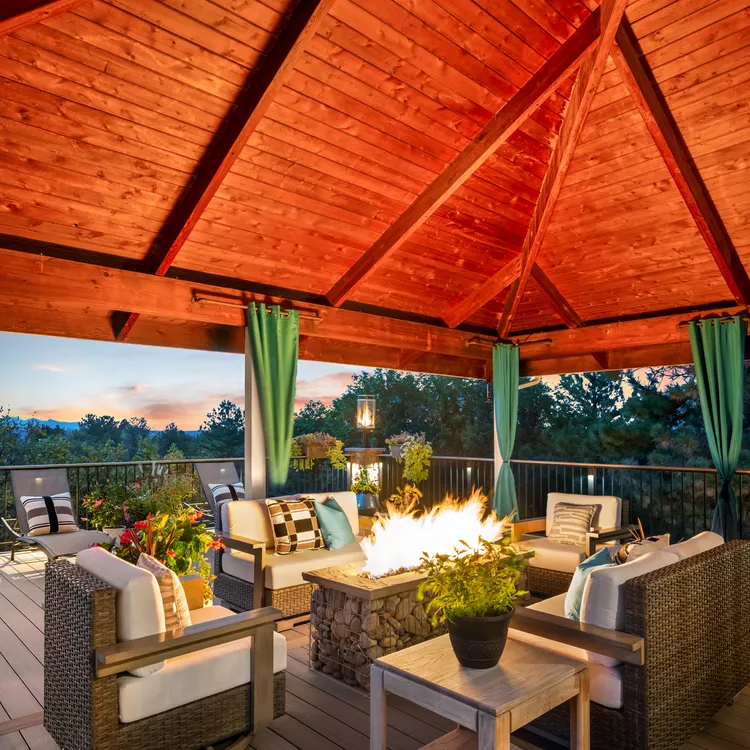
We design and build fireplaces on and into decks for homes in Littleton, South Denver and the foothills. A deck fireplace is planned with the deck's framing, because a stone or brick fireplace adds weight the deck has to carry.
We design and build gas, wood-burning, natural stone and concrete fire pits for yards in Littleton and across South Denver and the foothills. One crew handles the design, the base, the masonry and the finish, and we coordinate a licensed plumber for the gas line.
- Natural stone, brick or modern
- Wood, gas or dual-fuel
- Flue sized for altitude
- Gas, wood-burning and electric fireplaces
- Gas or wood-burning
How an outdoor fireplace gets builtfrom draft check to test burn.
Four outdoor fireplace styles
- Natural stone: full-height stacked or veneer stone in Colorado buff, moss rock or Lyons sandstone.
- Brick: clay brick or thin-brick veneer, an easy match for brick homes and existing hardscape.
- Modern: a linear gas firebox framed in smooth stucco, board-formed concrete or large-format porcelain, often with a glass media bed in place of logs.
- Rustic: a reclaimed timber mantel, rough-cut stone and a heavy hearthstone, a fit for foothill homes in Evergreen and Golden.
Wood, gas or dual-fuel
A wood-burning outdoor fireplace has a true firebox and a code-height chimney and gives the most heat, but it needs a taller flue at altitude, a woodpile and ash cleanout. A gas outdoor fireplace lights with a button on a natural gas or propane line and shuts off instantly. A dual-fuel build pairs a wood firebox with a gas starter. The fuel changes the firebox, the chimney height and the permits, so we settle it before design. Many Colorado fire bans restrict open wood burning while allowing permanent, permitted gas appliances; check your county's current rules before you light.
Materials for Colorado winters
The firebox is lined with firebrick and refractory mortar rated for direct flame. Footings are poured below frost depth and reinforced. Stone and grout are chosen to hold color in high-altitude sun, and the chimney cap and joints are sealed against water, because water that freezes inside a joint splits stone.
The build, step by step
- Site and draft assessment: we check prevailing wind and overhead clearance and pick a spot where the chimney draws and the heat reaches your seating.
- Design and renderings: plans and 3D renderings showing the style, fuel, chimney height and how the outdoor fireplace ties into the yard.
- Permits and build: we handle permits and inspections, pour the footing, coordinate a licensed plumber for any gas line, and lay the firebox, masonry and chimney.
- Test burn and walkthrough: we light the fire with you and confirm the draft pulls clean.
Price and timeline
Material, fuel, site work and extras set the price. Full natural stone costs more than thin veneer or stucco; slope, tough access or a deep frost footing adds site work; seat walls, a TV niche, lighting and a wood box cost less added during the original build than later. We give a fixed scope and written estimate after the site visit. A typical masonry outdoor fireplace is finished within a few weeks of breaking ground.
Deck Fireplaces
Gas, wood or electric
- Gas: instant on and off, no ash, adjustable heat, and typically allowed during Stage 1 and Stage 2 fire bans. A gas fireplace needs a gas line or propane tank, and the burner orifices need adjusting for altitude to burn efficiently. Vented gas units can sit under a cover.
- Wood-burning: the highest heat output and a real wood fire, with no gas line or wiring. A wood-burning fireplace needs a chimney or flue, reinforced deck framing for the weight, and ash and spark management, and is usually restricted during fire bans.
- Electric: unaffected by altitude, typically allowed during fire bans, and some electric units work under a patio cover.
We also set gas-fed fire pits into deck surfaces, inside a heat-resistant surround with ventilation below the deck.
Surround materials
- Natural stone, including Colorado moss rock and flagstone: resists freeze-thaw when sealed, needs resealing every 2 to 3 years, and is heavy enough to need reinforced framing or its own footing under the deck.
- Brick: long-lasting, with mortar repointing every 10 to 15 years where freeze exposure is heavy, and a moderate weight.
- Porcelain tile rated for outdoor use: light enough to go over concrete backer board. Ceramic tile does not hold up to Colorado weather.
- Steel and iron: powder-coated or Corten steel for screens, framing and surrounds, with little upkeep in dry Colorado air.
Permits, HOAs and clearances
Most Colorado municipalities require a building permit for a permanent fire feature on a deck, and a gas fireplace usually needs a separate mechanical permit for the gas line. Some HOAs restrict wood-burning units or require architectural review first, and we prepare the material specs, site plan and elevation drawings they ask for. A deck fireplace must also keep set distances from combustible railings, overhead structures, property lines and neighboring buildings, and we design those clearances in before inspection.
How the project runs
- Consultation about how you will use the fireplace and your budget
- Design, with drawings and material samples
- Site evaluation of the framing, gas and electrical access, wind exposure and clearances
- Your choice of surround, finish and accessories
- Permit research and submission
- Installation: structural prep, gas or electrical rough-in, the unit, the surround and the finish
- Walkthrough on operating and maintaining the fireplace
Installation takes one to three weeks. A gas fire pit set into an existing deck sits at the short end; a full stone fireplace with a new gas line and framing changes takes three weeks or more. Along the windy Front Range, we add wind screens or shielding, or pick a sheltered spot, based on your property's wind patterns.
Fire Pits
Gas or wood-burning
A gas fire pit runs on natural gas or propane through a stainless burner under lava rock or fire glass. You light it and shut it off with a switch or remote, and it leaves no smoke, ash or firewood to store, which suits HOA areas with burn restrictions. A wood-burning fire pit costs less to build and needs no gas line, but it needs a wider clear zone and a spark screen.
Shapes and sizes
A round fire pit 38 to 48 inches across seats six and keeps everyone the same distance from the flame. Square and rectangular pits line up with retaining walls and modern homes, and a tabletop lid turns one into a low table when the fire is off. A linear gas trough runs four to six feet along a seat wall or a dining patio. A sunken fire pit drops into the grade with seat walls around it, which suits a sloped foothills lot.
Materials
- Fire brick and a steel insert line the burn chamber, so the outer stone never takes the worst of the heat.
- Natural stone (Colorado buff sandstone, flagstone or granite veneer) or segmental block over a concrete core.
- Stainless steel burners and pans on gas fire pits.
- Polymeric or mortar joints matched to the build, so the stone stays put through wind and snow.
The build, step by step
- Consultation and site check: we confirm grade and drainage, find the gas meter, and look at where smoke and heat will travel.
- Design and quote: a layout with the exact materials, burner and diameter, and a fixed price.
- Base and gas line: we excavate, compact and build a drained footing, and the gas line is run and pressure-tested.
- Masonry and first fire: the stone goes up, the burner is set and tested, and we light the fire pit with you on site.
Fuel, size and shape set the price. A wood-burning stone pit is the simplest build; gas adds the burner, the line and the permit; linear and sunken designs with seat walls are the largest. A gas fire pit needs a permit, and we pull it.
Outdoor Fireplaces & Fire Pitsquestions, answered.
Should my outdoor fireplace burn wood or gas?
Choose gas for push-button flame, no smoke and use during most dry-summer fire restrictions; choose wood for crackle and the strongest heat. Dual-fuel gives you both. We size the firebox and chimney differently for each, so the fuel is settled before design.
Does altitude affect how an outdoor fireplace drafts?
Yes. Thinner air on the Front Range changes how a firebox drafts, and a flue sized for sea level can smoke back into your seating. We size the throat and chimney height for high-altitude draft so smoke goes up the chimney.
Can I use a gas outdoor fireplace during a Colorado fire ban?
Often, yes. Many Colorado fire bans restrict open wood burning but allow permanent, permitted gas appliances. Confirm your county's current rules before you light.
Do I need a permit for an outdoor fireplace?
Usually. An outdoor fireplace with a gas line, or with a chimney over a set height, typically needs a permit and inspection, and we pull the permits and schedule the inspections.
How long does it take to build an outdoor fireplace?
A typical masonry outdoor fireplace is finished within a few weeks of breaking ground. Permits, utility runs and material lead times set the exact schedule, and you get a timeline during design.
What stone works for an outdoor fireplace in Colorado?
Colorado buff, moss rock and Lyons sandstone are the stones we are asked for most, laid as full stone or veneer. Behind any face stone, the firebox is lined with firebrick and refractory mortar, and the stone and grout are chosen to hold their color in high-altitude sun.
Do I need a permit for a fireplace on my deck in Colorado?
Yes, in most Colorado municipalities: a permanent deck fireplace needs a building permit, and a gas fireplace usually needs a separate mechanical permit for the gas line. Requirements vary by city and county. We research and submit the permits as part of the project.
What type of deck fireplace works best at Colorado's altitude?
A gas deck fireplace with altitude-adjusted burners works reliably at Front Range elevations of 5,000 to 9,000 feet and above. Standard gas orifices burn inefficiently in thinner air, so the burner needs calibrating. Electric deck fireplaces are unaffected by altitude.
Can I use a deck fireplace during a fire ban?
Gas and electric deck fireplaces are typically allowed during Stage 1 and Stage 2 fire bans because they produce no embers or sparks. Wood-burning fireplaces are usually restricted. Check your county's current fire restrictions before lighting any fire.
Should I get a gas or wood-burning fire pit?
Choose a gas fire pit for instant on and off with no smoke or ash; choose wood for crackle, more heat and a lower build cost. Gas also suits areas with burn restrictions. Wood needs room for a wider clear zone and a spark screen.
What we buildfor South Denver and the foothills.
Decks
Framing
& Stairs
Staircases
Systems
Repair
Pergolas
Covers
Lighting
Walls
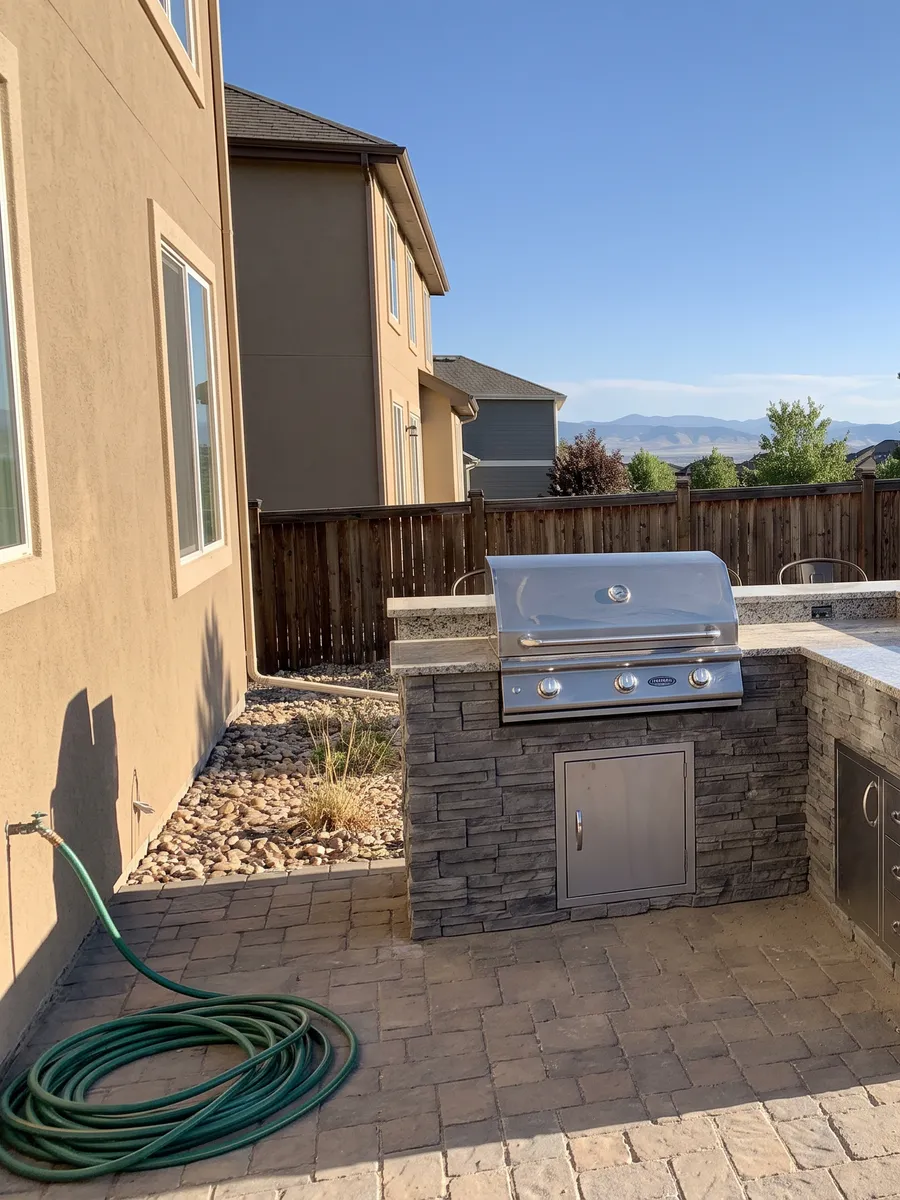
& Bars
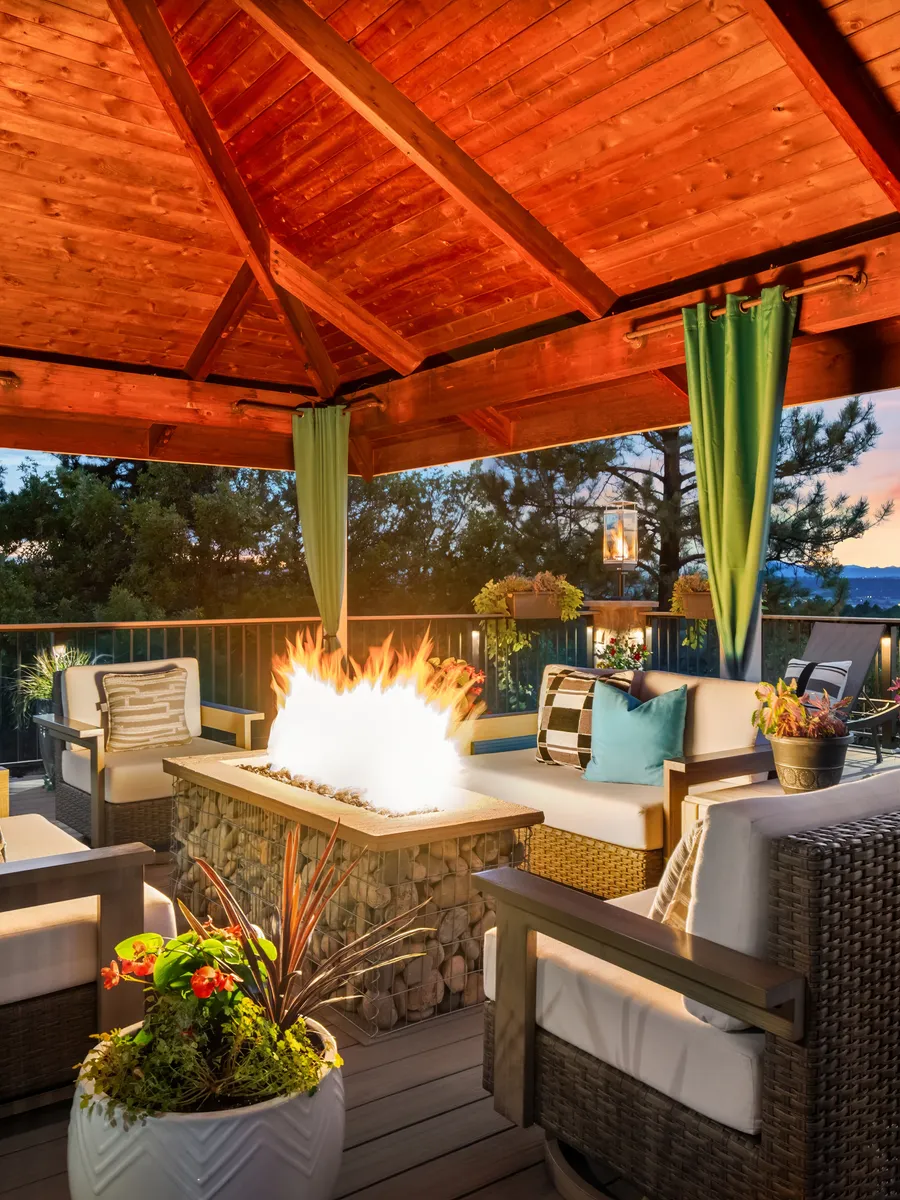
Fire Pits
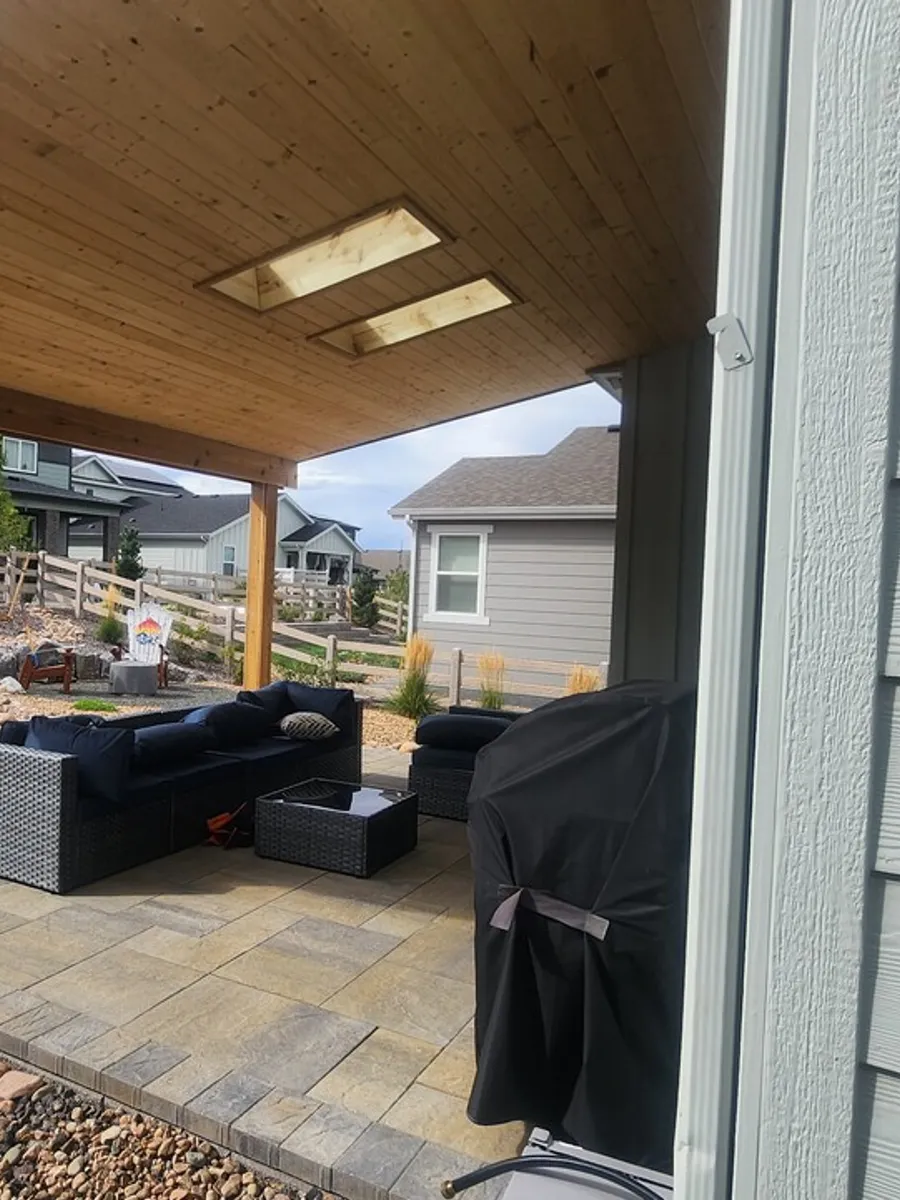
Patios
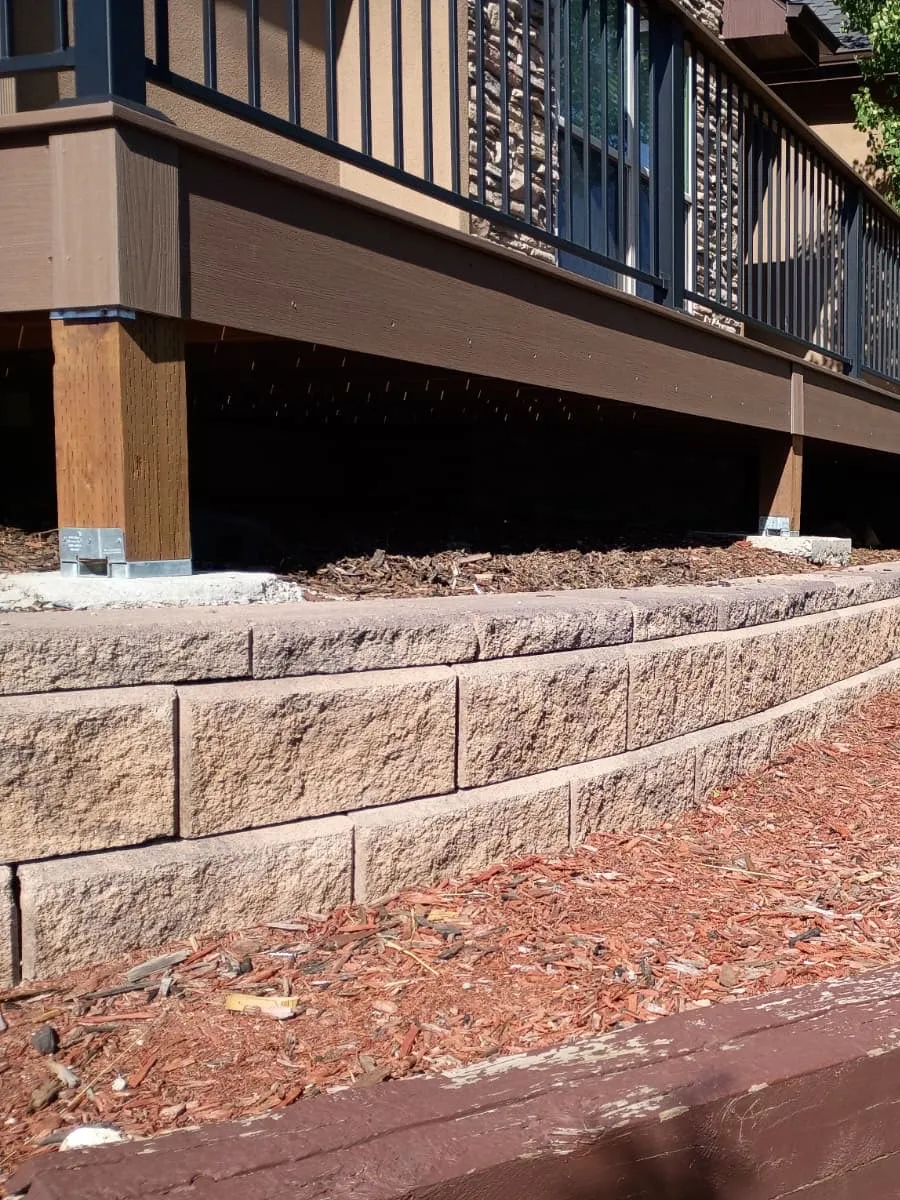
Walls
& Turf
& Fountains
Recent workacross South Denver.
What homeowners sayon Google.

Get a free estimatefor your deck or backyard.
Call us or send the form with what you want built, and we set up a free consultation at your home.