
Custom Wood & Cedar Pergolas Built for Colorado Weather
Cedar pergolas bring warmth and real grain to a patio or outdoor kitchen. We design, engineer, and seal each one for South Denver and Foothills sun, wind, and snow load, not a big-box kit spec.
Wood Moves With Colorado’s Sun and Freeze-Thaw Cycles
A wood pergola is one option inside our full pergola and shade structure work, and it’s the one homeowners pick when they want visible grain, warm tone, and a structure that ages instead of just sitting there.
At 5,280 feet, UV intensity runs stronger than at sea level, and it bleaches and dries out exposed cedar faster than a lower, hazier climate would. Left unsealed, the top and south-facing beams of a pergola will gray and start to check within a season or two.
Framing has to work as hard as the finish does. Snow load and Front Range wind gusts both push on a horizontal wood structure, so posts, beams, and rafters get sized and engineered for our conditions, not a stock spec built for a milder region.
Cedar, Stained or Left to Gray Naturally
Cedar is the wood species we build pergola framing from. It’s naturally resistant to rot and insects, straight-grained, and it takes stain evenly across rough-sawn and finished lumber alike.
A UV-resistant stain keeps the wood close to its original color, at the cost of the resealing rhythm below. Left natural, cedar weathers to a silver-gray on its own within a year or two outdoors and needs less upkeep, just an occasional clean and a check for surface checking.
Rough-sawn beams read heavier and more rustic. Finished, smooth-planed lumber gives cleaner lines that suit a more tailored patio. Both hold up the same structurally, so the choice comes down to which one matches your house.
Attached Shade Off the House, or a Freestanding Structure in the Yard
An attached pergola ties into your roofline or an exterior wall, works well over a deck or dining patio right off the kitchen, and usually needs fewer footings since the house carries part of the load.
A freestanding pergola stands on its own posts and footings, so it can sit anywhere in the yard, over a fire pit seating area or a spot with a view, without touching the house.
Cedar’s grain and warm tone put a wood pergola squarely in the Rustic & Natural landscape design style we build toward on the design side of our work, alongside dry-stack stone and weathered timber.
From Consultation to a Finished Structure in Four Steps
Consultation
We walk the site, check sun exposure and wind, and talk through how cedar will look against your house before anything gets drawn.
Design
You get a scaled plan and material spec: rough-sawn or finished lumber, stain color, attached or freestanding footprint, sized for local snow load.
Build & Permit
Our crew pulls the permit where one applies, sets engineered footings, and frames and finishes the structure on site.
Walkthrough
We walk it with you, point out the joinery details that let the wood move with the seasons, and leave you with a resealing schedule.
Joinery Built to Move, a Finish Built to Be Renewed
Cedar expands and contracts across a Colorado winter, swelling with moisture and shrinking as it dries out between freeze-thaw swings. We use post-and-beam joinery with room for that movement, mortise-and-tenon or bolted connections rather than a rigid glued joint, so the frame doesn’t crack at the seams after a few winters.
The stain and sealant on top wear fastest under direct mountain sun, long before the frame itself is at risk. That ongoing upkeep is the trade-off of a real wood structure here, a wood pergola asks for a maintenance rhythm a powder-coated frame doesn’t.
If low upkeep matters more to you than the look of real wood grain, our powder-coated aluminum pergolas hold their finish without resealing and are worth a look before you decide.
What Homeowners Build Around a New Pergola
A patio underneath it
A paver or flagstone patio underneath gives the posts a level, permanent footing and finishes the space instead of leaving a pergola over gravel or bare lawn.
Shade over the grill
Positioned over a grill and prep counter, an outdoor kitchen stays out of direct sun during the exact hours it gets used most.
Light for after dark
String or architectural outdoor lighting mounted to the rafters turns the structure into the spot people actually gather once the sun’s down.
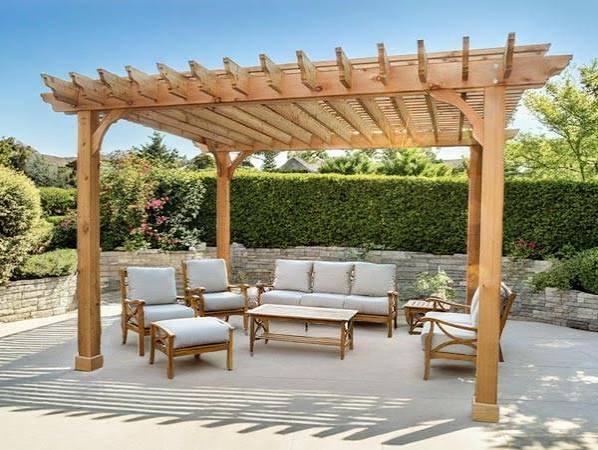
A Cedar Pergola We Built in Centennial
-
Our Centennial Cedar Pergola project shades a dining patio through the hottest part of the afternoon while keeping the yard feeling open rather than boxed in. The posts sit on poured concrete footings engineered for the wind loads common on the Front Range, and the open lattice roof was sized to shade the table without blocking out the whole yard.
It’s one of several outdoor living projects we’ve built for homeowners around Centennial.
Frequently Asked Questions About Wood Pergolas in Colorado
How much does a wood pergola cost in Colorado?
Our wood pergola projects fall in the same roughly $8,000 to $30,000 range as our pergola work overall, depending on footprint, attached versus freestanding footings, and finish. You’ll get a firm number after the design step.
Do you build with wood species other than cedar?
Cedar is what we use for pergola framing, chosen for its rot resistance and even stain uptake at altitude. If you have a different species in mind, raise it at your consultation and we’ll talk through whether it fits our framing methods and Colorado conditions.
How often does a wood pergola need to be resealed at this altitude?
Plan on refreshing the stain or sealant every two to three years. A structure that catches full sun most of the day on a south- or west-facing patio will fade and dry out faster, and may need it closer to every two.
Do I need a permit for a wood pergola?
Most attached structures and larger freestanding pergolas need a building permit in South Denver and Foothills jurisdictions, and requirements vary by city and by whether the pergola attaches to your house. We handle the permit application once your design is finalized.
How does a wood pergola compare to one of your metal pergolas?
Wood gives you real grain and a warmer look but needs periodic resealing. Powder-coated aluminum skips that upkeep entirely but reads more modern than rustic. Most homeowners decide based on which look fits the house, then weigh the maintenance trade-off.
Will my pergola be engineered for snow load?
Yes. Post spacing, beam sizing, and footing depth are all specified for your roof pitch and elevation rather than a generic kit rating, and that engineering shows up in the design step before we build anything.
How long does a wood pergola project take, start to finish?
Most projects move from a finalized design to a finished structure within a single build season. Exact scheduling depends on permit turnaround in your jurisdiction and the size of the structure, and we’ll give you a firm date range at your consultation.
Ready to Talk Through a Wood Pergola for Your Yard?
We’ll walk the site, talk through cedar against your house, and give you a firm design and price range. Ask about financing options at your consultation if spreading out the cost helps.
Free Consultation · No Obligation